23 Jul 2009 - permalink
Fake Steve Jobs (a.k.a. Dan Lyons):
We all know that there’s no fucking way in the world we should have microwave ovens and refrigerators and TV sets and everything else at the prices we’re paying for them. There’s no way we get all this stuff and everything is done fair and square and everyone gets treated right. No way. And don’t be confused – what we’re talking about here is our way of life. Our standard of living. You want to “fix things in China,” well, it’s gonna cost you. Because everything you own, it’s all done on the backs of millions of poor people whose lives are so awful you can’t even begin to imagine them, people who will do anything to get a life that is a tiny bit better than the shitty one they were born into, people who get exploited and treated like shit and, in the worst of all cases, pay with their lives.
22 Jul 2009 - permalink
Jeff Atwood:
In short, I hate software – most of all and especially my own – because I know how hard it is to get it right. It may sound strange, but it’s a natural and healthy attitude for a software developer. It’s a bond, a rite of passage that you’ll find all competent programmers share.
Indeed a healthy attitude and an explanation why developers run the risk of endlessly improving code without external deadlines. Mark a realistic date and stick to it.
20 Jul 2009 - permalink
Marco Arment on vacation:
Most people imagine their personal paradises as something like sipping drinks on a beach and doing nothing. To me, that would be hell. I’d rot into boredom and depression from mental atrophy.
That is very close to how I feel.
20 Jul 2009 - permalink
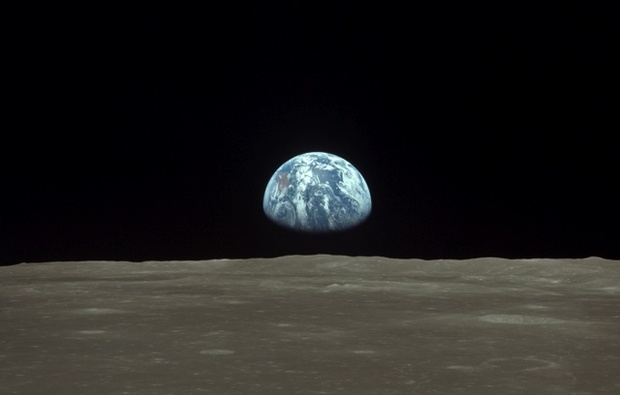
Today marks the 40th anniversary of the first moon landing by the Apollo 11 crew of Neil Armstrong, Buzz Aldrin and Michael Collins. There are obviously tons of sites mentioning this historic occasion and I thought I’d chime in with a few good links.
The always interesting Jason Kottke has a Giant Apollo 11 post with many high quality links, including the brilliant We Choose The Moon with the activities replayed as they happened.
The Big Picture by Boston Globe is always fascinating and this time they’ve compiled a list of 40 remarkable images for Remembering Apollo 11.
I find the loss of the original tapes of the moonwalk unfortunate beyond belief, so I am glad to see that NASA has released a set of restored high definition videos of the preserved footage.
NASA’s new LRO (Lunar Reconnaissance Orbiter) has returned some impressive images of the moon and the resolution is so much better than anything achievable from Earth that you can quite clearly see the landing sites of the Apollo missions. According to NASA, future images from LRO will be of even greater detail and should put any remaining (and unfounded) skepticism to rest.
17 Jul 2009 - permalink
Remarkable animation showing how much the earth’s crust moves when viewed at a geological timescale. 650 million years in 80 seconds. From 400 millions years ago to 250 million years in the future.
16 Jul 2009 - permalink
Khoi Vinh on Michael Mann:
Over the course of his career, Mann has produced a taut, stylistic and often brutally impersonal filmography that seems most interested in the concept of work. His movies are preoccupied with how men (almost always men) of extraordinary skills practice their craft — and the price they must pay for doing so.
10 Jul 2009 - permalink
Amazing!

9 Jul 2009 - permalink
John Paczkowski on the privacy implications of Google’s upcoming operating system Chrome OS:
Lest we forget, Google is in the behavioral targeting business. Why would people ever use an OS developed by a company whose business is based on meticulously recording and analyzing their online behavior?
7 Jul 2009 - permalink
Necessity is the mother of invention, this time from a two year old US law on energy efficiency to take effect in 2012. Described as “tough standards”, the law requires incandescent bulbs to be 30% more efficient that today’s (Wikipedia). In contrast, the EU has agreed to put a complete ban on incandescent bulbs by 2012.
“There’s a massive misperception that incandescents are going away quickly,” said Chris Calwell, a researcher with Ecos Consulting who studies the bulb market. “There have been more incandescent innovations in the last three years than in the last two decades.”
I wouldn’t go so far as the author and call it the cutting edge (they are still way behind compact fluorescent lamps), but there are certainly improvements on the way and with an estimated 90% of all private light sources in the United States being incandescent that is definitely needed.
Indeed, the incandescent bulb is turning into a case study of the way government mandates can spur innovation.
2 Jul 2009 - permalink
Magnified 400 times using a scanning electron microscope. Such a strange and alien creature.