19 Feb 2009 - permalink
I have previously used this site for experiments with new frameworks and testing various integration with external sites such as Twitter or Flickr. The blog format is an easy Hello World type of initial project and I’ve implemented the core parts in the PHP frameworks like Symfony, CodeIgniter and the currently used Zend Framework.
When I last redesigned the blog in October 2007, the typography was based heavily on the Blueprint CSS framework and fitted for blog posts. This worked fairly well.
Since then, I’ve added Twitter integration for quick thoughts (now replaced by internal system) and Flickr for photos. The brevity of these notes made the page look cluttered and the distinction between posts was not as clear as it should have been. This was the primary reason for this new look.
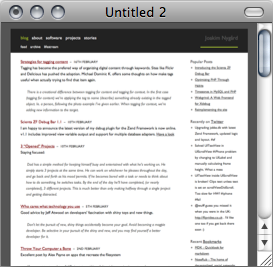
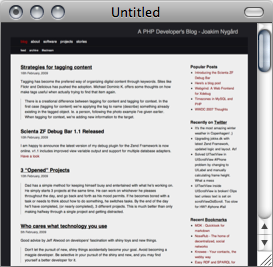
I think the comparative screenshots above illustrates the point exactly. There is a much better separation of content in the new on the right and I am frankly appalled at how it looked before with text all over the place. I belive this is a step in the right direction :)
17 Feb 2009 - permalink
Tagging has become the preferred way of organizing digital content through keywords. Sites like Flickr and Delicious have pushed the adoption. Michael Dominic K. offers some thoughts on how make tags useful when actually trying to find that item again.
There is a creational difference between tagging for content and tagging for context. In the first case (tagging for content) we’re applying the tag to name (describe) something already existing in the tagged object. Ie. a person, following the photo example I’ve given earlier. When tagging for context, we’re adding new information to the target.
3 Feb 2009 - permalink
Excellent post by Alex Payne on apps that recreate the filesystem
If you want to store data of differing types within a lightweight organization system, I encourage you to check out the filesystem.
And a suggestion I’ve been living by with great success:
If you don’t want to be forever accumulating applications, store stuff as plain text on the filesystem. It’s dead reliable, you can shuffle it about however you want, and you’ll be able to search through it quickly, even without an index.